


MR. PEANUT/LADIES AND GENTLEMEN
Adam Ross's 2010 novel Mr. Peanut is the best initial work by an author I've read since Michael Chabon's The Mysteries of Pittsburgh back in 1988. Ross's recent collection of short stories, Ladies and Gentlemen, released this past June, received excellent reviews as well. The Boston Globe's critic wonderfully suggested that Ross's style was a blend of Raymond Chandler and Raymond Carver. Doesn't get any better than that. Even the legendarily harsh c


TOP TEN Finale (at least until some time in 2012)
To conclude my thoughts on Sight & Sound 's Top Ten lists that appear each decade (in the year ending in 2), let me clarify a few points. There were 144 critics who took part in the Critics' Poll in 2002 and 108 directors who contributed to the Director's Poll. Taste is idiosyncratic. There were 631 films nominated by the critics, and 408 of them received exactly one vote apiece. One can see how personal the selection process is; some voters didn't even list Citizen Kane


TOP TEN (Part V-B)
Sorry I haven't posted recently. This weekend I will conclude my review of the Top Ten lists of Sight & Sound magazine, often thought to be the world's most respected journal for the study of cinema. In a few months, Sight & Sound will publish its compilation of the views of critics and directors from around the globe, as well as a number of Top Ten lists. In 2002, the last year the surveys were taken, the magazine published a Top Ten Critics' List as well as a Top Ten D


TOP TEN (Part V)
In 2002, Sight & Sound , arguably the premiere film journal in the world, conducted its latest survey of critics and directors to determine the positioning of global cinema and its artistic successes. The poll reached fifty years old and had earned a certain gravitas from cinephiles. Here are the results with brief justifications by the editors: The Sight & Sound Top Ten Poll 2002 Critics' Poll 1. Citizen Kane (Welles) Dazzlingly inventive, technically breathtaking, Citi
TOP TEN (Part IV-B)
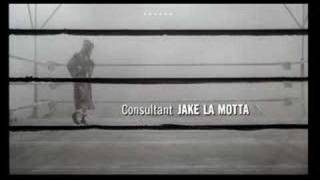
As I mentioned earlier, the newly established Directors' poll of greatest films varied significantly from that of the international Critics' consortium. Let's take a look: The Sight & Sound Top Ten Poll: 1992 Directors’ poll 1. Citizen Kane (Welles) 2. 8 ½ (Fellini) 2. Raging Bull (Scorsese) 4. La strada ( Fellini) 5. L’Atalante (Vigo) 6. The Godfather (Coppola) 6. Modern Times (Chaplin) 6. Vertigo (Hitchcock) 9. The Godfather Part II (Coppola) 10. The Pass


TOP TEN (Part IV)
In 1992, Sight & Sound magazine added a Directors' poll in addition to the long-established Critics' Top Ten. Surprisingly, they had little in common. It seems likely that all the selections would make the Top 50 in both categories, but only a few made both groups' Top 10. First, the Critics' poll: The Sight & Sound Top Ten Poll: 1992 Critics’ poll 1. Citizen Kane (Welles) 2. La Regle du Jeu (Renoir) 3. Tokyo Story (Ozu) 4. Vertigo (Hitchcock) 5. The Searchers (For


TOP TEN (Part III)
As I discussed in my last post, the 1982 Sight & Sound Critics' poll was remarkable for a number of reasons. I was ecstatic because Alfred Hitchcock was finally being given his due. Francois Truffaut's book-length interview with Hitchcock, Hitchcock/Truffaut , published in 1966, was a seminal text in my life. I had been a fan of Hitchcock films since I was small, but this book opened up a whole new way of looking at film. It is still a fascinating work, and I now own the


TOP TEN (Part II)
As I mentioned yesterday, the 1962 Sight & Sound Critics' poll confirmed a sea change in attitudes toward classic cinema, beginning with the rise of Orson Welles' Citizen Kane to the film pantheon. Here is that list: The Sight & Sound Top Ten Poll: 1962 Critics’ poll 1. Citizen Kane (Welles) 2. L’avventura (Antonioni) 3. La Règle du jeu (Renoir) 4. Greed (von Stroheim) 4. Ugetsu Monogatari (Mizoguchi) 6. Battleship Potemkin (Eisenstein) 7. Bicycle Thieves (De


TOP TEN
I recently viewed a classic French film I had never seen before--Marcel Carne's Le Jour se Leve (Daybreak) (1939). The screenwriter was Carne's frequent collaborator, surrealist Jacques Prevert, and Le Jour se leve came early in a titanic run of films that typified the "Golden Age" of French cinema, reaching its climax with Les Enfants du Paradis ( Children of Paradise ) (1945). I was more familiar with this period in cinema history as the time that generally offered the ty

A SONG FOR YOU (Part 2)
Couldn't help but add Brother Ray's cover of Leon Russell's classic. Enjoy.


